Is ChatGPT a Good Therapist? What AI Can and Cannot Do for Your Mental Health
More than one in five Americans have used an AI chatbot for mental health support, and most of them have not told anyone. Erin Bratsky, LCPC, owner of Brighter Sky Counseling in Billings, MT, on what AI genuinely helps with, where it falls short, and how to tell when it is time to talk to a person.
My thirteen year old has started saying "must be AI" about everything.
A photo that looks too good. A voice on a video. A sentence in an email that came out a little too clean. The sunsets around here have been unreal this summer, and last week we were driving home under one of them when she looked up and said, "Look at that. Must be AI."
She was joking. She is thirteen, and joking is most of what she does. I have not stopped thinking about it, though. She was looking at an actual sunset and creating. commentary on the culture of AI today.
Which brings me to something I have been seeing in my office.

Why are so many people talking to AI about their mental health?
Far more people are doing it than anyone realizes, and most of them have not told a soul.
Rula's 2026 State of Mental Health Report found that more than one in five Americans have used an AI chatbot for mental health support. A separate workplace analysis put the number much higher, with 48.7% of U.S. adults saying they turned to a large language model for psychological support in the past year. Only 18.5% of that use happened on a tool actually built for mental health. The rest of it is happening on general chatbots designed to write emails and debug code.
The reasons are not mysterious. Cost is the big one. In 2026, 41% of Americans named cost as the top barrier to care, up from 25% the year before. Confusion is another, with roughly 37% saying they do not know what kind of therapy would even help them. And then there is the quiet reason, the one people usually admit to me around session four. A chatbot cannot be disappointed in you, will always be there and will shower you with kindness.
In Montana, add distance and waitlists. If you live an hour outside Billings and you are trying to work up the nerve to call a stranger, the app on your phone is a very short walk.
What is AI actually good at?
I want to be fair here, because the honest answer is more than you would think.
A chatbot is awake at 3 a.m., which is when a lot of the hard thinking happens. It can help you put words to something you have been carrying around without a name. It can explain what a panic attack is doing to your body, or what EMDR is, or where ordinary sadness ends and depression begins. It can help you rehearse a conversation you are dreading. It can help you organize your thoughts before a first appointment so you are not sitting on my couch saying "I don't even know where to start."
There is data suggesting that is exactly what is happening. In Rula's survey, 71% of the people using AI for mental health support had also been in traditional therapy. For a lot of people, the chatbot is the doorway.
If that is how you are using it, keep reading.
Where does it fall short?
Here is the part that concerns me clinically.
A chatbot agrees with you. It is built to be agreeable. Tell it your drinking is fine and it will help you feel fine about your drinking. Describe a fight with your partner in a way that leaves out your own part, and it will validate the story you handed it. Therapy works partly because a person sits across from you and gently declines to accept the first version.
It also has no idea what your face just did. When I ask about someone's father and their shoulders begin to shift, that is information. When a voice goes flat while describing something that should have been exciting, that is information. A chatbot only ever has what you were willing to type.
And it cannot hold the arc of your life. It will never say, "You told me almost exactly this in March."
The safety piece is the one I would ask you to take seriously. A Brown University study found that AI chatbots consistently violate mental health ethics standards. Researchers at MIT have found that leaning on AI alone can deepen loneliness. These tools carry no license, no supervision, no obligation to act if you are in danger, and no legal confidentiality. What you type may be stored with no real sense of how that storage is being used.
Is it safe to use AI for mental health support?
It depends entirely on what you are asking it to do.
Using a chatbot to learn about anxiety, sort through a tangled week, or write down what you want to bring to your next session is low risk and sometimes genuinely useful.
Using a chatbot as your only support while you are in crisis, processing trauma, or making a decision about your marriage is where the risk lives. Those situations need a person who is licensed and accountable to you.
If you are in crisis right now, call or text 988. A human being answers.
How do you know when it is time to talk to a person?
A few signs I would pay attention to.
You have been having roughly the same conversation with the app for weeks and nothing in your actual life has moved. You feel better for twenty minutes after you close it and then worse than before you opened it. You have started typing instead of calling the friend who would ask you a harder question. You are writing things at 2 a.m. that would alarm you if someone you loved had written them.
Any of those is worth a real conversation with a real person.
What happens in a room that cannot happen in an app
Something shifts when another nervous system is in the room with yours. Your body registers it before your thinking mind catches up.
A therapist tracks patterns across months. They notice what you skip. They can tolerate your anger without withdrawing and your silence without rushing to fill it. They are legally bound to keep what you say private and legally bound to act if you are not safe. And they can offer treatments with decades of outcome research behind them.
At Brighter Sky Counseling, we meet plenty of people who spent six months talking to an app before they picked up the phone. That is often how people get here.
One last thing about the sky
Her joke landed like a reminder. The connection and importance of real people, real world, real sky. We stayed in the car at the end of the driveway and watched it together until it was gone, without our phones. (Except to capture a few photos, wink).
You already know the difference between being answered and being known. If the chatbot has taken you as far as it can, our team in Billings would be glad to hear from you. We see clients in person and offer telehealth anywhere in Montana.
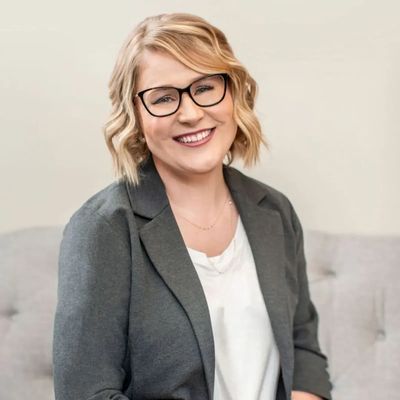
Erin Bratsky is the owner and founder of Brighter Sky Counseling in Billings, Montana, where she leads a multidisciplinary team of therapists serving clients across the state. She works with adults on anxiety, depression, and trauma, and she has spent the last decade building a practice where people can be met as they actually are.
Full profileReady to take the next step?
Our team in Billings is here to help, in person or via telehealth anywhere in Montana.